

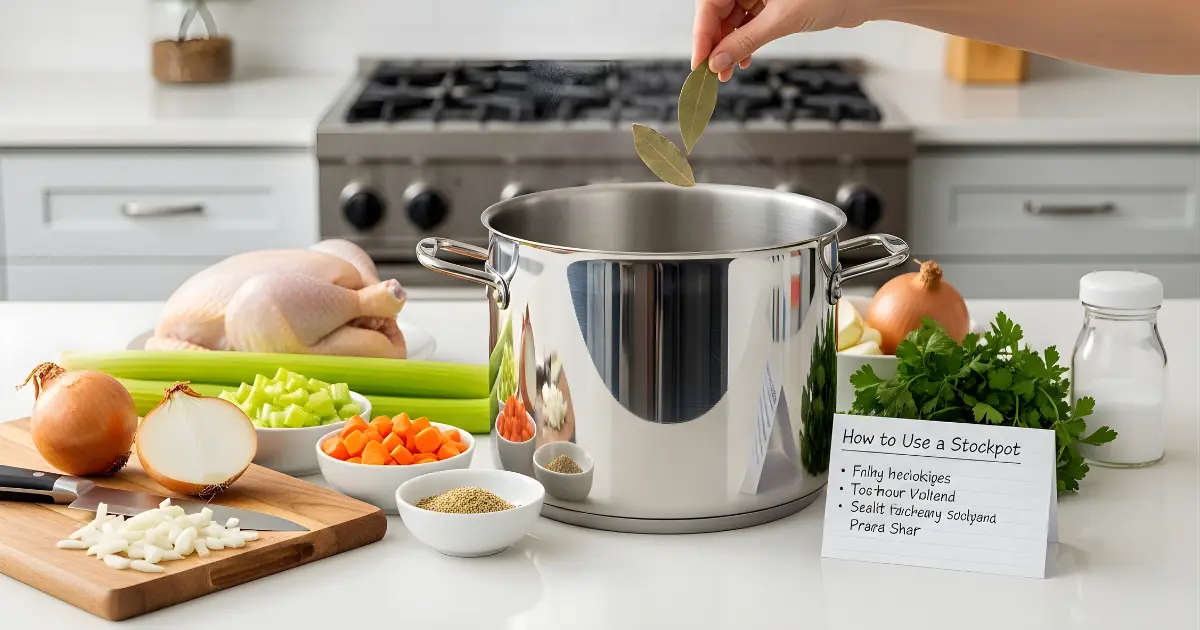
A stockpot is one of the most versatile and essential tools in any kitchen. Whether you’re cooking hearty soups, making homemade broth, boiling pasta for a crowd, or preparing seafood, learning How To Use a Stockpot properly can transform your cooking experience. This deep, tall pot is designed to hold large volumes of liquid and ingredients, making it perfect for slow simmering and batch cooking.
Many home cooks own a stockpot but don’t fully understand its full potential. With the right techniques, heat control, and ingredient preparation, a stockpot can help you create rich flavors, tender meats, and perfectly cooked meals. In this guide, we’ll walk through everything you need to know, step by step, so you can confidently master stockpot cooking techniques in your everyday cooking.
A stockpot is used for making soups, broth, boiling pasta, and cooking large meals. Use proper heat, enough water, and slow simmering for rich, flavorful results.
By the end of this article, you’ll understand how to choose the right stockpot, prepare ingredients, control temperature, avoid common mistakes, and clean it properly. If you’ve ever wondered making homemade broth like a pro, you’re in the right place.
What Is a Stockpot and Why Is It Important?
A stockpot is a type of cooking pot with straight sides and doesn’t have the flaired out edges, like dutch ovens or soup pots. It has a large capacity to contain liquids and ingredients which consequently makes it perfect for making soups, stocks & stews, boiling water for pasta or seafood. Unlike wide pans, a stockpot is perfect for foods you want to cook evenly without falling over.
A stockpot’s main feature is its size. You can cook big meals for your large family in bulk, or make homemade broth that will last you several days. A taller pot decreases evaporation, a beneficial quality when you’re looking to simmer liquids for hours.
The versatility of stockpots is another reason they are so crucial. You’ll want them to blanch your vegetables, boil some corn, steam shellfish or slow-cook a hunk of meat. Once you’re familiar with the basics, large pot cooking takes care of itself in the kitchen.
Choosing the Right Stockpot for Your Kitchen
Before learning making homemade broth, it’s important to choose the right one. Stockpots come in different sizes, materials, and designs. The most common sizes range from 6 quarts to 20 quarts, depending on how much food you usually cook.
If you cook for a small family, a 6–8 quart pot is usually enough. For meal prepping, parties, or large recipes, a 12–16 quart stockpot works better. Stainless steel stockpots are popular because they heat evenly, resist rust, and are easy to clean. Aluminum pots heat quickly, while enamel-coated pots look stylish but need careful handling.
The lid is just as important as the pot itself. A tight-fitting lid helps trap heat and moisture, which is essential for simmering stock or soup. A sturdy handle also makes it safer to lift a full pot.
When you choose the right stockpot, learning How To Use a Stockpot becomes much easier and more enjoyable.
Preparing Ingredients for Stockpot Cooking
Preparing ingredients for stock involves cleaning and chopping aromatics (onions, carrots, celery) into large, uniform pieces, preparing bones (roasting for deeper flavor, removing excess fat/offal), and gathering herbs/spices (parsley, thyme, peppercorns).
Key steps include starting bones in cold water, skimming foam, adding vegetables later, simmering gently (never boiling hard) to prevent cloudiness, and straining well after cooking for a clear, flavorful stock.
Wash and Clean All Ingredients Properly
Proper ingredient preparation is key when learning stockpot cooking techniques. Because stockpots are used for large-batch cooking, the way you cut and measure ingredients matters.
Begin by washing all vegetables and making sure that meat is properly trimmed. In the case of soups and stocks, vegetables such as onions, carrots, celery and garlic are typically roughly chopped into large chunks. That way they can release flavor slowly as they cook. The meat and bones ought to be rinsed well and patted dry before you put them in the pot.
Juices and vegetables can be roasted before being turned into broth to maximize flavor. This extra layering will add depth and complexity to your end dish. If you’re making pasta or a seafood boil, prep your salt and spices upfront so that you can properly season the water.
Once you’ve got everything ready, start cooking this delicious soup and master making homemade broth the right way!
How To Use a Stockpot for Making Stock and Broth
Where are they used?Probably the most common use of a stock pot is for creating homemade soup stock or broth. Be patient, be gentle with the heat and layers of ingredients.
Bone, vegetables and herbs go on in stockpot. Cover it completely with cold water. You want the flavor to extract from the beans very slowly as it warms. Put the pot on medium heat, and allow it to come to a soft boil.
When this starts to boil, lower the heat and allow it to simmer. Remove any foam that rises to surface. This will ensure your broth is clear and clean-tasting. Allow it to cook there for a few hours — the exact timing depends on the type of stock you’re aiming for.
The secret is in the long simmering. Boiling pasta in the stockpot you use for making stocks gives a thick, savory foundation to soups, sauces and stews.
Cooking Large Meals in a Stockpot
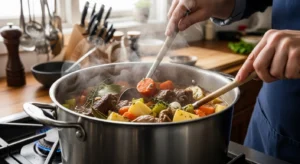
One pot can feed a crowd. It’s perfect for everything from chili and stew to curry, gumbo & more and can easily make big batches.
Begin by heating oil at the base of your pot and sautéing your aromatics such as onions, garlic and spices. This builds the flavor foundation. Next, throw in your meats, or beans and veggies.
Slowly pour in your liquids, stirring making sure to scrape the bottom. Put the lid on the pot, and let it all simmer away. The high sides of the stockpot prevent splattering, so you can easily turn out perfect risotto or sauce.
Once you’ve learned how to cook giant pots of soup and stew, your life gets a lot easier in terms of time, effort and scrubbing.
Boiling Pasta and Blanching Vegetables
Another traditional use for a stockpot is boiling pasta and blanching vegetables. The large size lets water maintain a rolling boil after food is added.
Fill the pot with water and generously season with salt. It seasons the food from within. When the water is boiling, add your vegetables or pasta. Stir gently to prevent sticking.
For parboiling, cook vegetables briefly and then shock in ice water. That way, they retain their color and your texture remains crisp. Knowing how to use a stockpot for these easy tasks will enhance your everyday cooking.
Using a Stockpot for Seafood Boils
Stockpots are ideal for seafood boils because they need room and heat regulation. It’s shrimp, crab, corn and potatoes boiled in seasoned water.
Begin by boiling water with spices, lemon and garlic. Add potatoes, then corn, and then seafood. This layering makes sure that everything gets cooked.
When it’s finished, drain the water and serve from the pot itself or pour onto a table for an old-school seafood feast. Discovering the other cooking pot uses for seafood are special meals easy and fun.
Heat Control and Cooking Techniques
Heat control is essential when using a stockpot. High heat is good for boiling, but simmering requires low, steady heat.
Too much heat can cause burning at the bottom or excessive evaporation. Always adjust the flame after reaching a boil. A gentle simmer keeps flavors balanced and textures tender.
Stir occasionally, especially when cooking thick soups or sauces. This prevents food from sticking. Mastering heat control is a big part of learning making homemade broth properly.
Heat control in cooking involves understanding heat transfer (conduction, convection, radiation) and applying it through techniques like dry heat (roasting, grilling), moist heat (boiling, steaming), and combination methods (braising) to manage temperature and timing for specific textures and flavors, using tools like thermometers and adjusting heat by lifting pans or adding liquid to prevent burning. Mastering these methods allows for searing, tenderizing, and even cooking, crucial for dishes from delicate sauces to tough meats.
Key Heat Transfer Methods
- Conduction: Heat transferred by direct contact (e.g., pan-frying, boiling).
- Convection: Heat transferred by circulating fluid (air or liquid); even cooking (e.g., baking, simmering).
- Radiation: Heat from glowing elements or flames (e.g., grilling, broiling).
Common Mistakes to Avoid
When it comes to the use of a stock pot, many beginners tend to make some basic mistakes. One of the biggest mistakes is overfilling the pot. This can lead to spills and hot spots.
Another pitfall is underseasoning. When masses of food are being prepared, they need more salt and seasoning. Taste and adjust seasoning as you cook, always.
If you don’t skim when making stock, the broth will be cloudy. Paying attention to the little things makes your results better, and helps you grow in understanding of how to boil pasta in a stockpot.
Cleaning and Maintaining Your Stockpot
After cooking, proper cleaning is important to keep your stockpot in good condition. Let it cool before washing to avoid warping.
Use warm water, mild soap, and a soft sponge. Avoid harsh scrubbing tools that can scratch the surface. For stubborn stains, soak the pot with baking soda and water.
Dry it thoroughly before storing. Good maintenance ensures your stockpot lasts for years and stays ready for your next recipe.
Final Thoughts
Learning How To Use a Stockpot opens up endless cooking possibilities. From rich homemade broths to crowd-sized meals, this kitchen tool is both powerful and practical.
With the right size, proper preparation, heat control, and cleaning habits, you can use your stockpot confidently and creatively. Whether you’re a beginner or an experienced cook, mastering stockpot cooking techniques will make your kitchen life easier and more enjoyable.
