

Pasteurising eggs at home lets you enjoy recipes that use raw or lightly cooked eggs like homemade mayonnaise, Caesar dressing, meringue, or tiramisu with reduced risk of food-borne illness. The process gently heats eggs just enough to kill harmful bacteria such as Salmonella, without cooking the egg itself, so the texture and performance in recipes remain nearly unchanged.
While commercially pasteurised eggs exist, they can be expensive or hard to find. Home pasteurisation gives you control and safety when recipes call for uncooked eggs.
What Does Pasteurising Eggs Mean?
Pasteurisation is a heat-treatment process that reduces harmful bacteria inside the eggs without cooking them. The yolk reaches a specific temperature that kills bacteria but stays below the point where the egg begins to coagulate.
This allows you to use eggs in recipes that normally leave them uncooked, ideal for homemade sauces, desserts, and dressings with a reduced risk of illness.
Why Pasteurise Eggs at Home?
Raw eggs can carry Salmonella bacteria, which may cause food poisoning if ingested. While the chances are low, the risk increases when eggs are eaten raw or undercooked.
Pasteurising eggs at home gives an extra layer of food safety, especially important when cooking for young children, pregnant people, the elderly, or anyone with a compromised immune system.
What You’ll Need
To pasteurise eggs at home, you need:
- Fresh, clean eggs
- A large pot or saucepan
- A digital food thermometer
- A slotted spoon or tongs
- A bowl of cold water for cooling
Step-by-Step: Stove-Top Pasteurisation Method
This method uses warm water to gently heat the eggs while controlling the temperature to avoid cooking them.
Bring Eggs to Room Temperature
Take the eggs out of the fridge and let them sit until they reach room temperature. Room-temperature eggs heat more evenly and reduce the risk of cracking.
Prepare a Warm Water Bath
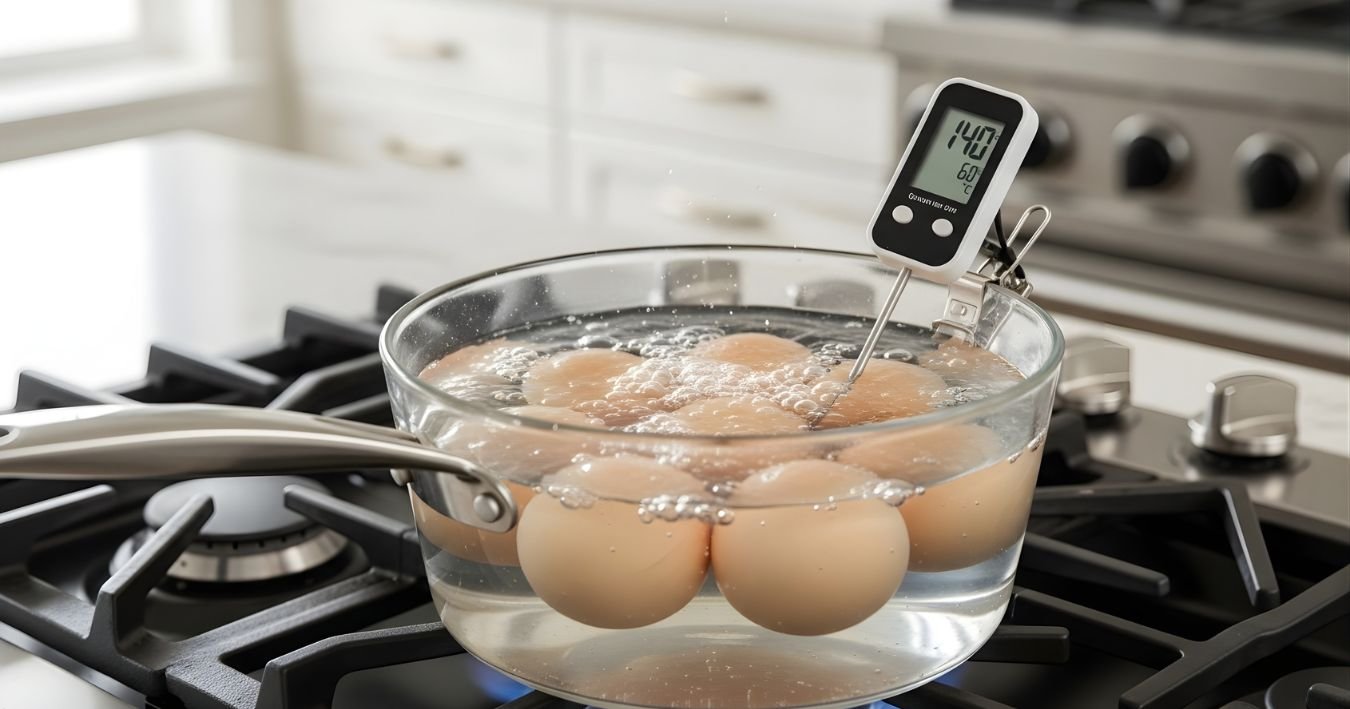
In a saucepan, add enough water to cover the eggs completely. Heat the water until it reaches about 140°F (60°C), warm but not boiling. Use a thermometer to watch the temperature carefully.
Pasteurise Eggs
Place the eggs into the warm water. Keep the water between 140°F and 142°F (60–61°C). If it goes above this, the eggs will start cooking.
- For medium or large eggs, hold at this temperature for 3–3½ minutes.
- For extra-large or jumbo eggs, increase the time to about 5 minutes.
Continue monitoring the water temperature and adjust the heat as needed to maintain the range.
Cool Immediately
Remove the eggs with a slotted spoon or tongs and place them in a bowl of cold water. This stops the heating process and prevents further cooking.
Use or Store Safely
Dry the eggs and place them in the refrigerator. Use them just like regular eggs in recipes that call for raw eggs, or store them for later use.
Alternative Method: Sous Vide
If you have an immersion circulator (sous vide), you can control the water temperature precisely. Set the sous vide to 135°F (57°C) and pasteurise the eggs in their shells for 75 minutes. This slower, lower-temp method can improve safety without cooking the egg.
Tips for Success
- Always use a digital thermometer. Accuracy is key.
- Avoid boiling water that gets too hot and will cook the egg.
- Pasteurise Eggs should be refrigerated promptly and used soon after pasteurisation.
- Consider marking pasteurised eggs to avoid confusion with regular eggs.
Safety Notes
Home pasteurisation reduces risk but doesn’t offer the same guaranteed safety as commercial pasteurisation. Precision in time and temperature is critical; even a slight drop below the target can leave bacteria alive.
For vulnerable groups such as pregnant individuals, young children, older adults, or those with weakened immunity, using commercially Pasteurise Eggs or avoiding raw egg recipes may be the safest option.
What You Can Use Pasteurise Eggs For
Pasteurise Eggs behave almost like regular raw eggs and are safe for recipes including:
- Homemade mayonnaise
- Caesar or aioli sauces
- Meringue-based desserts
- Raw cookie dough or batter
- Smoothies or custards that call for uncooked eggs
They give you the freedom to enjoy these dishes with reduced food safety concerns.
Final Thoughts
Pasteurise Eggs at home is a practical way to increase food safety when working with raw or undercooked recipes. By gently heating eggs to the right temperature and cooling them quickly, you significantly lower the risk of harmful bacteria while keeping eggs usable for a wide range of culinary creations. Always use reliable tools, follow temperature guidelines carefully, and consider commercial pasteurisation for the highest safety standards.
