

Wood cutting boards are a staple in kitchens around the world. They are durable, gentle on knives, and naturally antimicrobial, making them a preferred choice for many chefs and home cooks. However, wood is a porous material, which means it can absorb liquids, bacteria, and odors if not properly cleaned and maintained. Without proper care, your cutting board can become a breeding ground for harmful bacteria, develop stains and odors, and eventually crack or warp.
This guide will take you step by step through everything you need to know to clean, sanitize, deodorize, and maintain your wood cutting board, ensuring it remains safe, hygienic, and long-lasting.
Remove Food Debris Immediately
One of the most important steps in keeping a wooden cutting board clean is to remove food debris immediately after use.
- Use a bench scraper or spatula to scrape off leftover bits of food.
- Pay special attention after cutting raw meat, poultry, or fish, as these can carry bacteria that multiply quickly on porous surfaces.
- Avoid letting residue dry on the board, because dried food can be harder to remove and may leave stains or odors.
This simple step reduces the risk of bacterial growth and makes the next steps of cleaning more effective.
Hand Wash with Warm, Soapy Water
Unlike plastic or composite boards, wood cutting boards should never go in the dishwasher. High heat, prolonged exposure to water, and harsh detergents can cause warping, cracking, or splitting. Instead:
- Pour warm water into a sink or basin and add a few drops of gentle dish soap.
- Use a soft sponge or dishcloth to scrub all surfaces, including the edges and corners where bacteria can hide.
- Rinse thoroughly with clean water.
- Never soak the board in water, as this allows moisture to penetrate deep into the wood, leading to cracks and possible mold growth.
Hand washing with mild soap ensures cleanliness without damaging the natural wood fibers.
Sanitize Naturally
To kill lingering bacteria and ensure your board is hygienic, you can use natural sanitizing methods that won’t harm the wood:
- White Vinegar: Wipe or spray undiluted white vinegar on the surface. Vinegar is a natural disinfectant and helps remove odors.
- Hydrogen Peroxide: Apply a small quantity of 3% hydrogen peroxide onto the board. Give it some time to fizz, then rinse it clean. This method effectively kills bacteria without harsh chemicals.
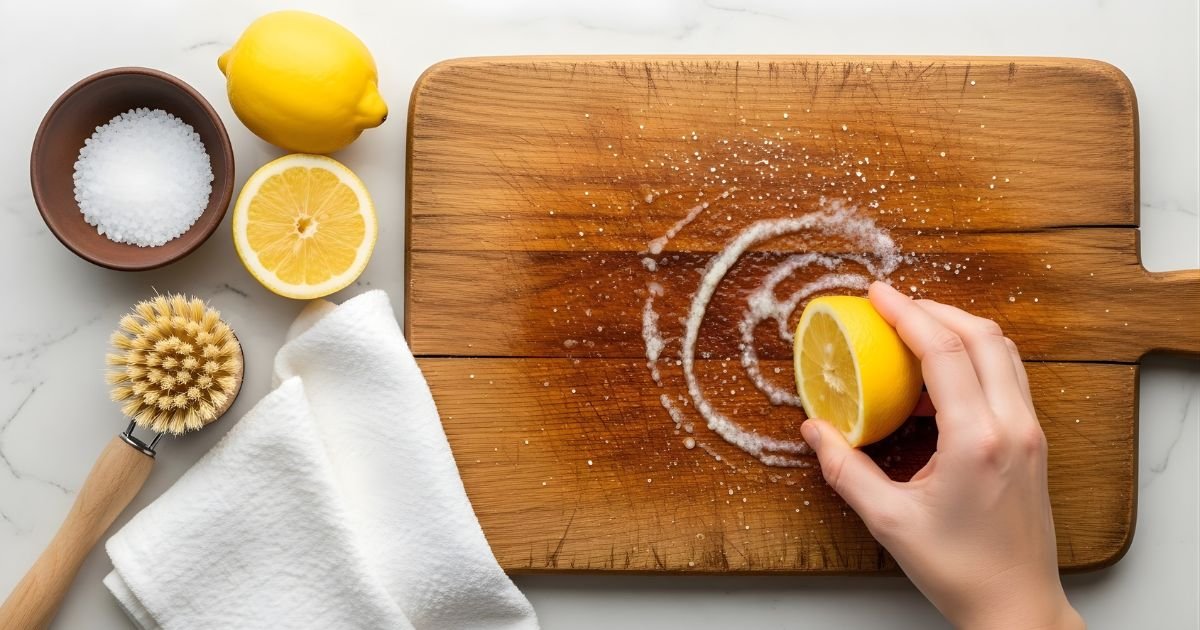
- Lemon and Salt: Sprinkle coarse salt over the board, then rub it with a halved lemon. This scrubs away stains, neutralizes odors, and leaves the board refreshed.
Natural disinfectants are not only effective but also safe for boards that come into contact with food daily.
Thoroughly Dry the Board
After washing and sanitizing, dry your cutting board immediately. Proper drying is crucial to prevent mold, warping, and cracks:
- Wipe the board with a clean towel.
- Keep it standing or tilted on one side to allow complete air circulation.
- Never leave a board flat and wet, as trapped moisture encourages bacteria and warping.
Consistent drying ensures your wood board remains strong and hygienic for long-term use.
Deodorize and Remove Stains
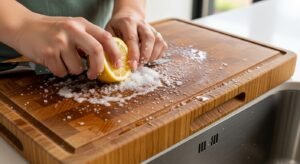
Even with regular cleaning, wood cutting boards can develop stubborn odors or stains from onions, garlic, beets, or other foods. Fortunately, there are natural ways to refresh your board:
- Baking Soda Paste: Mix a little water with baking soda to create a smooth, spreadable paste. Rub it into stains or odor-prone areas, let it sit for 10–15 minutes, then rinse and dry.
- Salt and Lemon Scrub: Sprinkle coarse salt on the board and rub it with a cut lemon. The natural acidity neutralizes odors while the salt acts as a gentle abrasive.
- Vinegar Wipe: For strong odors, wipe the board with white vinegar, then rinse.
Regular deodorizing keeps your cutting board fresh and safe for food preparation.
Oil Your Board Regularly
Wood cutting boards need conditioning to maintain durability and prevent cracking:
- Use a mineral oil that’s safe for food or a specialized conditioner designed for cutting boards. Avoid coating with olive or vegetable oils, which are prone to going rancid.
- Apply a thin layer of oil with a clean cloth and let it soak in for several hours or overnight.
- Wipe off any excess oil before storing.
Oiling prevents moisture from penetrating the wood, keeps it looking rich, and protects it from splitting or warping. Boards that are regularly oiled last longer and maintain their natural antibacterial properties.
Deep Cleaning for Heavy Use
For boards that see frequent or heavy use, especially with raw meat, periodic deep cleaning is recommended:
- Boiling Water Steam: Place a clean board over steaming water to loosen debris and sanitize without soaking.
- Coarse Salt Scrub: Sprinkle coarse salt, then scrub with a damp brush to remove deep stains.
- Sanding: For older boards with deep knife marks or discoloration, lightly sand the surface with fine-grit sandpaper, then oil afterward.
Deep cleaning ensures that even the most heavily used boards remain hygienic and safe for cooking.
Routine Maintenance and When to Replace
Even with proper care, wood boards eventually wear out. Signs that it’s time to replace your board include:
- Deep cracks or splits that trap bacteria
- Persistent odors that do not respond to cleaning
- Excessive warping or surface damage
For minor wear, sanding and re-oiling can restore your board. Regular care, however, is key to extending the life of your cutting board.
Tips and Best Practices
- Always use separate cutting boards for raw meat and vegetables to avoid cross-contamination, and avoid strong detergents or bleach that can damage the wood fibers.
- Hand-wash boards immediately after use.
- Store upright to allow proper airflow.
- Condition monthly or whenever the wood appears dry.
Following these practices ensures that your cutting board remains a safe and durable kitchen tool.
Final Thoughts
Cleaning and maintaining a wood cutting board is simple when done correctly. By removing debris promptly, washing with mild soap, sanitizing naturally, drying thoroughly, deodorizing, and regularly oiling, your board will stay clean, safe, and long-lasting.
A well-maintained wood cutting board not only enhances food safety but also preserves the beauty and natural durability of the wood, making it a kitchen essential for years to come. Proper care protects your family, your food, and your investment in quality kitchen tools.
