

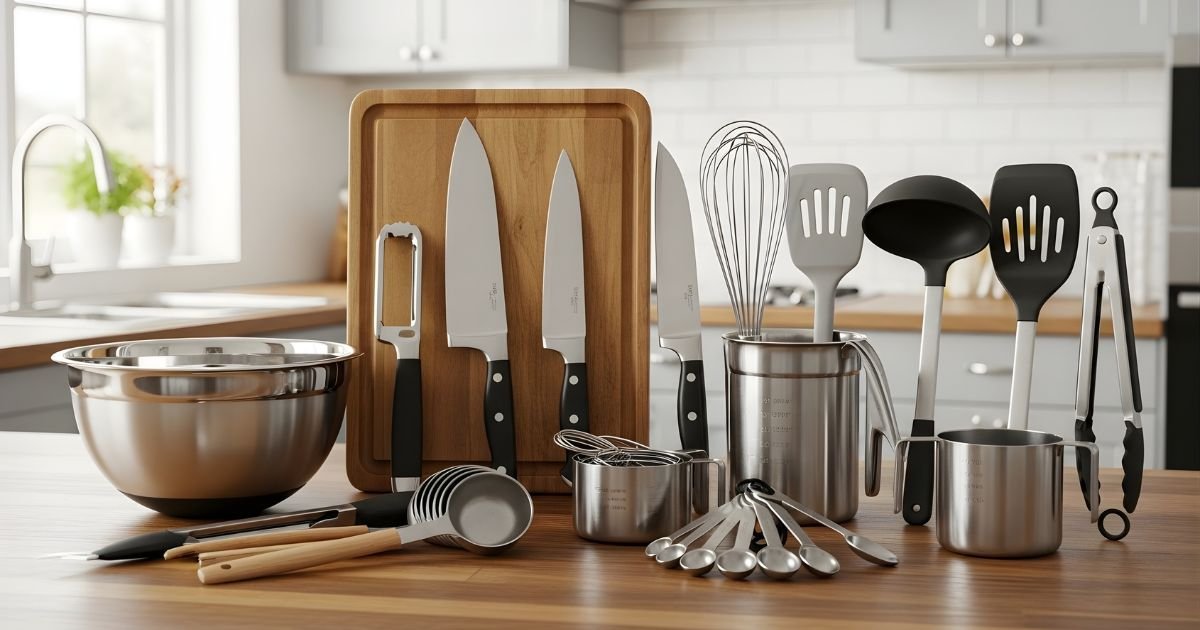
You use kitchen tools every time you cook, so pick ones that match what you actually make and how often you cook. Choose a few high-quality, versatile tools that feel comfortable, perform well, and suit your budget to make cooking faster and less stressful.
They should fit your space and routine—small kitchens need multiuse tools, while frequent cooks benefit from durable, task-specific items. Look for safe, ergonomic designs and materials that last so your tools keep working without causing extra work or waste.
Key Takeaways
- Match tools to your cooking habits and kitchen size.
- Invest in versatile, well-made items that feel comfortable to use.
- Prioritize safety, durability, and value when buying tools.
Understanding Your Cooking Needs
Knowing how often someone cooks, what dishes they make, and how many people they feed will guide the right tool choices. Focus on frequency, cuisine style, and portion sizes to avoid buying tools that sit unused or break down quickly.
Assessing Cooking Frequency
They should list how many meals they cook each week and note which days meals are homemade. Kitchen Tools every day needs durable, multiuse tools like a chef’s knife, a heavy skillet, and nesting mixing bowls. Cooking twice a week can work with a smaller set : a good knife, a medium saucepan, and a nonstick frying pan.
Consider time spent per meal. If most dinners take under 30 minutes, choose quick-clean tools and pans with even heat for fast cooking. If they like weekend meal prep, include storage containers, a slow cooker, or a large Dutch oven. Track habits for two weeks to spot real needs.
Identifying Your Preferred Cuisines
They should name the top 3 cuisines they cook most often. For stir-fry and Asian dishes, a wok, a bamboo spatula, and a fine-mesh strainer matter. For baking and pastries, invest in an oven thermometer, measuring spoons, a stand or hand mixer, and silicone baking mats.
Match materials to techniques. High-heat searing needs stainless steel or cast iron. Nonstick pans suit eggs and delicate fish. Mediterranean or Italian Kitchen Tools benefits from a heavy saucepan for sauces and a garlic press or micro plane. Use a simple checklist: cuisine → three core tools → one specialty tool.
Determining Meal Sizes
They should note typical serving counts: solo, couple, family, or meal-prep batches. Use this table to pick pot and pan sizes:
| Servings | Recommended Pan/Pot Sizes |
| 1–2 | 8–10 inch skillet; 1.5–3 qt saucepan |
| 3–4 | 10–12 inch skillet; 4–6 qt stockpot |
| 5+ or batch cooking | 12+ inch skillet; 6–8+ qt Dutch oven or stockpot |
Choose utensils sized to match cookware—long spoons for deep pots, wide spatulas for large skillets. Also consider storage space: large tools for big families may not fit small kitchens, so pick stackable or nested options when space is limited.
Essential Kitchen Tools for Every Home
This list focuses on practical Kitchen Tools that do real work: cutting, measuring, cooking, and storing. Each item saves time, improves results, and fits common home cooking tasks.
Must-Have Utensils
They should be durable and comfortable to hold. Start with a set that includes a solid turner (preferably silicone or thin metal), a slotted spoon, a ladle, and tongs. These four handle frying, stirring, serving, and lifting hot food without damaging cookware.
Add a whisk for sauces and a pair of kitchen shears for snipping herbs and opening packages. A bench scraper helps move chopped food and clean the cutting board. Store frequently used utensils in a counter crock for quick access.
Keep measuring spoons and cups for baking and precise seasoning. Use a digital kitchen scale for accuracy; it’s faster and reduces measuring errors. For more on safe knife handling and basic tools, the USDA kitchen safety tips are helpful.
Basic Cookware
Pick a good nonstick skillet (10–12 inch) and a heavy stainless-steel or cast-iron skillet for high-heat searing. Nonstick works for eggs and delicate fish; cast iron or stainless steel browns meat and lasts decades with care.
Include a medium saucepan (2–3 quart) for sauces, rice, and reheating. Add a 5–7 quart pot or Dutch oven for soups, stews, and one-pot meals. Choose lids that fit snugly to retain heat and moisture.
Keep baking sheets (rimmed), a roasting pan, and a 9×13-inch baking dish for oven tasks. Maintain cookware by avoiding metal Kitchen Tools on nonstick surfaces and by seasoning cast iron. For material comparisons and care tips, Consumer Reports offers clear guidance.
Fundamental Appliances
Start with a reliable microwave for quick reheating and safe defrosting. A toaster or toaster oven speeds breakfasts and small bakes while saving oven energy. Choose models sized for countertop space and household needs.
A blender or immersion blender covers smoothies, sauces, and soups. A food processor handles chopping, shredding, and dough work more quickly than knives for many tasks. If space is limited, an immersion blender and a mid-size food processor cover most needs.
Consider a slow cooker or Instant Pot for hands-off cooking and meal prep. They save time on batches and make tougher cuts of meat tender. Buy appliances with straightforward controls and good customer reviews to avoid repair hassles.
Materials and Durability Considerations
Choose materials that resist stains, hold up to heat, and match the user’s cooking style. Durable choices cut replacement costs and keep food safe.
Stainless Steel vs. Nonstick Options
Stainless steel offers high heat tolerance and resists scratches and stains. It works well for searing, deglazing, and high-temperature cooking. Look for 18/10 or 18/8 stainless for better corrosion resistance. Thicker gauge or multi-ply (clad) construction improves even heating and reduces hot spots.
Nonstick coatings make low-fat Kitchen Tools and cleaning easier. Pick PFOA-free ceramic or modern PTFE coatings from reputable brands. Expect nonstick surfaces to wear over time; avoid metal utensils and high heat to extend life. If nonstick flakes or loses release, replace the pan to avoid contamination.
Consider a mix: use stainless steel for browning and metal Kitchen Tools, and nonstick for eggs, pancakes, and delicate fish. Match cookware to the task to get the best performance and lifespan.
Evaluating Handle and Grip Quality
Handles affect comfort, control, and safety during use. Choose handles that stay cool when exposed to stovetop heat or that have silicone or rubber grips. Check for secure rivets or welded joints—loose screws or hollow handles can loosen or trap food.
Grip shape matters: an ergonomic, slightly contoured handle reduces wrist strain for long cooks. Look for textured or non-slip surfaces when hands are wet or oily. For oven-safe cookware, verify the maximum temperature the handle material tolerates.
Inspect connection points where the handle meets the tool. Seamless welds or multiple heavy-duty rivets signal better durability than single screws or glued fittings.
Evaluating Performance and Versatility
Assess performance by looking at how well a Kitchen Tools does its main job, and judge versatility by how many related tasks it can handle. Focus on durability, materials, and real-world use in your kitchen.
Multi-Function Tools
They should do multiple tasks without losing effectiveness. A good example is a chef’s knife that chops, slices, and minces well; it must hold an edge and balance comfortably. For gadgets, a blender that purees, crushes ice, and makes batter adds value only if each function works reliably.
Look for tools with adjustable settings or removable parts that expand use—interchangeable blades, multiple speed settings, or reversible heads. Check warranty and replacement parts availability; a tool that can be repaired or upgraded stays useful longer. Avoid items that advertise many uses but perform poorly at the core function.
Ease of Use and Cleaning
Kitchen Tools must be simple to operate and quick to clean, or they will sit unused. Controls should be intuitive: clear labels, one-handed operation where possible, and ergonomic grips to reduce fatigue. For electric tools, noise level and cord length matter for daily comfort.
Cleaning rules: dishwasher-safe parts save time, but confirm heat resistance and seals that won’t trap food. Tools with smooth surfaces, removable blades, and few nooks reduce bacteria risk. If a tool needs special cleaning, check instructions before buying; frequent hand-wash requirements can lower practical value.
Storage Efficiency
Kitchen Tools should fit the kitchen’s storage constraints without causing clutter. Measure available drawer, cabinet, and counter space before buying bulky items like stand mixers or large pots. Prefer stacked, nesting, or collapsible designs for pots, bowls, and measuring cups.
Consider vertical storage: wall rails, magnetic knife strips, or pegboards free counter space. For rarely used specialty tools, choose compact or foldable versions, or store them in labeled bins. Prioritize items used weekly for easy access and stash infrequent items where they won’t crowd daily workflow.
Budgeting and Investing Wisely
Plan how much to spend, which items need quality, and which can be inexpensive. Prioritize tools that get daily use and save money by buying basic items cheaply or secondhand.
Setting a Realistic Budget
They should list what they already own and write prices for missing items Kitchen Tools. Start with essentials: a good chef’s knife ($40–$120), a 10–12″ nonstick pan ($25–$60), a stainless saucepan ($20–$50), and a sturdy cutting board ($10–$30). Tally these to set a short-term goal.
Use this simple table to estimate cost:
- Low-cost setup: $80–$150
- Balanced starter: $150–$350
- Higher-end starter: $350–$700
They should shop sales, outlet stores, and reliable secondhand sources to stretch the budget. Prioritize immediate needs and delay specialty gadgets. Keep receipts and test items within return windows to avoid wasted spending.
When to Invest in Premium Brands
They should buy premium when the Kitchen Tools affects safety, performance, or lasts many years. Examples: professional knives, heavy stainless pans, and durable baking sheets. These often cost more up front but resist warping, hold edges, and heat evenly.
Look for warranties and repair policies before paying more. If a premium brand offers a lifetime warranty or free sharpening, the higher price can be worth it. Avoid premium labels on single-use gadgets; cheaper versions work fine for occasional tasks.
Safety and Ergonomic Features
Choose tools that reduce slip, burns, and wrist strain. Look for firm grips, heat resistance, and designs that fit the hand to lower injury risk and make cooking easier.
Non-Slip and Heat-Resistant Handles
They should have a textured surface or a soft-touch material like silicone to prevent slipping when hands are wet or greasy. Handles with contours or finger grooves help position the hand so the wrist stays neutral, which reduces fatigue during chopping or stirring.
Check heat-resistance ratings: silicone and stainless-steel cores with insulating sleeves resist temperatures from stovetop splashes and dishwasher cycles. Avoid thin plastic that melts or becomes brittle with heat. Look for rivets or secure bonding rather than glued joints; loose handles are a safety hazard.
Weight balance matters. Kitchen Tools that are too heavy at the head strain the wrist. Test a pan or spatula in hand to feel whether the center of gravity sits near the wrist. Prefer long handles for deep pans to keep hands farther from heat.
Child-Safe Options
Child-safe utensils use blunt edges, short handles, and locking mechanisms to reduce cuts and burns. For knives, buy ones with rounded tips and protective sheaths; teach proper grip and store them in a high, locked drawer or magnetic strip out of reach.
Select knobs and latches with childproof designs for appliances, such as stove knob covers and oven locks. Choose cookware with secure, stay-cool handles and lids with locking vents so hot liquids don’t spill if a child pulls on a pot.
Consider materials free of small detachable parts and BPA-free plastics. Label storage zones clearly and keep hazardous Kitchen Tools—mandolines, peelers, heavy knives—locked or well out of reach.
Staying Current With Kitchen Tools Innovations
Keep an eye on practical changes that save time, cut energy use, or replace single-use items. Focus on tools that match cooking habits and last several years.
Latest Trends in Kitchen Tools
Smart appliances now include ovens and cooktops with app control and preset programs for common dishes. They can list features to compare:
- Connectivity: Wi‑Fi or Bluetooth for remote monitoring and recipe guides.
- Automation: Sensors and presets for consistent results with less guesswork.
- Multi-function designs: Air fryers that roast and dehydrate; blenders that cook soups.
Look for durable materials like stainless steel and ceramic-coated nonstick that resist wear. Prioritize tools with replaceable parts and good warranties. Read tests and user reviews focusing on reliability, not just flashy features. Budget shoppers should pick one smart Kitchen Tools or multi-use item at a time so upgrades stay useful and affordable.
Eco-Friendly and Sustainable Choices
Choose items Kitchen Tools made from recycled steel, bamboo, or certified wood to reduce waste. Avoid single-use plastics and prefer reusable storage, silicone lids, and glass containers.
Energy-efficient appliances matter: induction cooktops and convection ovens use less power than older models. Check ENERGY STAR or manufacturer energy specs when possible.
Also consider lifespan and repairability. Kitchen Tools designed for easy part replacement or with available replacement blades and seals cut long-term cost and landfill impact. Buying used high-quality items can be smarter than new cheap ones.
FAQS
What tools does a beginner need?
A basic set includes Kitchen Tools chef’s knife, cutting board, mixing bowl, measuring cups, spatula, and a saucepan. These cover most simple recipes and teach core skills.
How should one pick knife material and size?
Choose a knife that feels balanced in the hand. Stainless steel resists rust and is low maintenance; high-carbon steel holds an edge longer but needs care.
Is expensive equipment worth it?
Not always. Spend more on items used daily, like a good knife or skillet Kitchen Tools. Save on single-use gadgets that add clutter.
How can one avoid buying duplicates?
List tasks the kitchen must handle and match tools to those tasks. Pick versatile items that perform several jobs, such as a Dutch oven or silicone spatula.
What about material safety and durability?
Look for nonreactive materials (stainless steel, glass) for acidic foods. Check reviews for wear and heat tolerance before buying.
How to care for tools to make them last?
Hand wash knives and oil wooden handles occasionally. Follow manufacturer instructions for nonstick pans and avoid metal on delicate surfaces.
Which tools save the most time?
A sharp knife, a good cutting board, and a reliable pan speed up prep and cooking. Time-saving gadgets help only if they match regular habits.
Can the same set work for small Kitchen Tools?
Yes. Choose stackable, multiuse items and foldable or nesting tools to save space. Prioritize quality over quantity.
Conclusion
Choosing kitchen tools starts with knowing how and what someone cooks. They should match cooking habits, workspace, and budget. Small, thoughtful choices make daily cooking easier.
Prioritize quality for items used often, like knives and pans. Spend more on durability and comfort. Save on tools used rarely.
Focus on versatility. A few multiuse Kitchen Tools reduce clutter and speed up prep. They also make the kitchen easier to maintain.
Care for tools to extend their life. Simple steps—hand washing certain items, regular sharpening, and proper storage—pay off. Maintenance keeps performance steady.
