

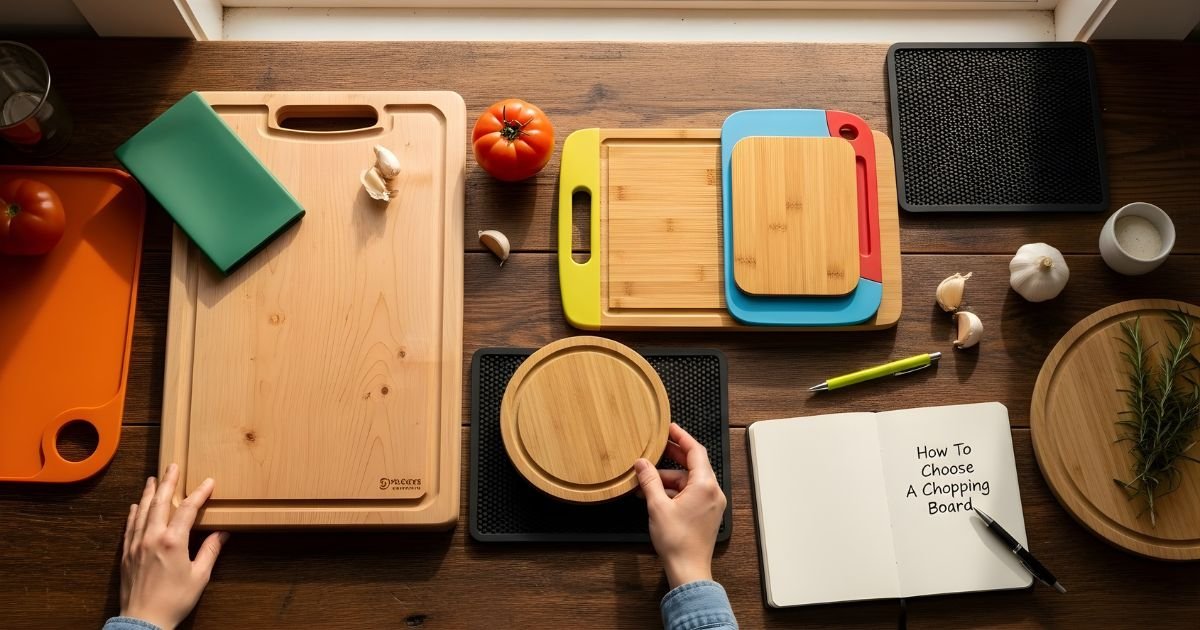
In many ways, your chopping board is the hardest-working piece of kit in your kitchen. It is there whenever you are prepping your morning vegetables and carving a dinner-time meat, and everything in between.
But too often, in the home-kitchen universe, the most essential item is one many cooks buy even less deliberately, grabbing whatever’s on sale or using the dulled-out board they bought when they got their first apartment.
The fact is, picking the right board affects everything from how long your knife will last to your family’s food safety. A bad pick can blunt your pricey blades, play host to dangerous bacteria, or twist and snap after a few months.
This guide will teach you what to look for in a Chopping Board that suits your style of cooking, your budget, and your kitchen space — or the right way to choose an upgrade if you already have one you’re not completely happy with. Shall we?
Understanding Chopping Board Materials: The Foundation of Your Decision
The material you choose is the single most important factor when learning how to choose a chopping board. Each option comes with distinct advantages, drawbacks, and maintenance requirements that can make or break your kitchen experience.
Wood Cutting Boards: The Classic Choice
Wood remains the gold standard for serious cooks and chefs. Hardwood boards like maple, walnut, and cherry offer a naturally knife-friendly surface that’s gentle on your blade’s edge.
The wood fibers actually have a bit of “give,” which means your knife sinks in slightly rather than bouncing off a hard surface, preserving that razor-sharp edge far longer than synthetic alternatives.
Beyond knife care, wood possesses natural antimicrobial properties. Studies have shown that bacteria struggle to survive on wooden surfaces compared to plastic, as the wood’s porous structure actually traps and kills microorganisms rather than allowing them to multiply. That said, wood requires more TLC than other materials. You’ll need to oil it regularly with food-grade mineral oil, hand-wash it immediately after use, and never, ever toss it in the dishwasher.
Plastic Chopping Board: The Practical Workhorse
Plastic Chopping Board, typically made from high-density polyethylene (HDPE), have earned their place in modern kitchens through sheer convenience.
They’re lightweight, affordable, and incredibly easy to clean most are dishwasher safe, which is a huge plus for busy households. The ability to color-code different boards for different food types (red for meat, green for vegetables, blue for fish) makes them invaluable for preventing cross-contamination.
However, plastic has a significant downside: knife marks. Every time you chop, your blade creates tiny grooves in the surface where bacteria can hide and multiply.
While you can sanitize plastic boards thoroughly, those deep cuts eventually become impossible to clean properly. Plastic also tends to be harder on knife edges, causing them to dull more quickly than when used on wood or bamboo.
Bamboo Cutting Boards: The Eco-Friendly Contender
Bamboo has surged in popularity as a sustainable, budget-friendly alternative to traditional wood. Technically a grass, bamboo grows incredibly fast and requires minimal resources, making it an environmentally conscious choice.
Bamboo boards are naturally resistant to moisture and less prone to warping than some hardwoods.
The trade-off? Bamboo is actually harder than many traditional woods Chopping Board, which can be tough on your knives. The surface is less forgiving, potentially leading to faster blade dulling. Additionally, many bamboo boards are constructed using adhesives that may contain formaldehyde, so it’s worth researching brands that use food-safe glues if this concerns you.
Matching Board Size and Thickness to Your Cooking Style
Once you’ve settled on a material, the next critical consideration in how to choose a chopping board is getting the right size and thickness for your needs. This isn’t just about having enough space to chop—it’s about safety, efficiency, and how the board functions in your specific kitchen setup.
Finding Your Ideal Dimensions
The board’s surface area directly impacts your workflow and safety. A board that’s too small forces you to work in cramped conditions, increasing the risk of slipping and injury. You’ll find yourself constantly moving chopped ingredients off the Chopping Board to make room for more, which interrupts your rhythm and slows down meal preparation.
For most home cooks, a board measuring at least 12 by 18 inches provides adequate workspace for everyday tasks. This size accommodates everything from dicing onions to breaking down a whole chicken without feeling claustrophobic.
If you frequently entertain or prepare large batch meals, consider stepping up to an 18 by 24-inch board. Professional chefs often work with boards even larger than this, but they also have commercial kitchen counters to accommodate them.
Don’t forget to measure your sink and storage space before purchasing Chopping Board. A massive board is useless if you can’t clean it properly or have nowhere to store it. Some people keep their primary board on the counter for easy access, while others prefer to store Chopping Board vertically in a cabinet or hang them on wall hooks.
The Grain Direction Debate: End-Grain vs. Edge-Grain vs. Face-Grain
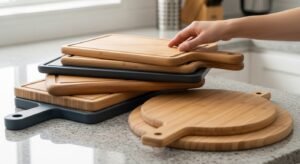
When you’re diving deep into how to choose a chopping board, you’ll encounter discussions about grain orientation. This refers to how the wood fibers are arranged in the board, and it significantly impacts performance, appearance, and price.
End-Grain Boards: The Professional’s Choice
End-grain Chopping Board are constructed with the wood fibers facing upward, like a butcher block. When you look at the surface, you’re seeing the ends of the wood fibers rather than the length. This orientation creates a surface that’s exceptionally gentle on knives because the blade actually pushes between the fibers rather than cutting across them.
The fibers then close back up, hiding cut marks and creating a self-healing effect.
End-grain boards are the most expensive option due to the complex construction process and greater amount of wood required. They’re also thicker and heavier, making them less portable. However, for serious cooks who prioritize knife care and don’t mind the investment, end-grain boards are unmatched in performance and longevity.
Edge-Grain Boards: The Balanced Option
Edge-grain Chopping Board display the long edges of the wood planks on the cutting surface. They’re more affordable than end-grain boards while still offering good durability and knife-friendliness.
The surface is harder than end-grain, which means it won’t show cut marks as easily, but it’s also slightly less forgiving on knife edges.
These boards are excellent all-around performers and represent the sweet spot for most home cooks. They’re lighter and easier to handle than end-grain boards, more affordable, and still provide years of reliable service with proper care.
Face-Grain Boards: Beauty Over Function
Face-grain boards show the flat, wide face of the wood planks. They’re the most affordable and visually striking option, often featuring beautiful wood patterns and colors. However, they’re also the least durable for heavy cutting tasks. The surface shows knife marks easily and can’t withstand the same level of abuse as edge or end-grain boards.
Face-grain boards work well for light prep work, serving, or as secondary boards in your kitchen. If you’re looking for a board primarily for presentation or occasional use, face-grain is a gorgeous choice.
Essential Features That Separate Good Boards from Great Ones
Beyond material and size, several features can significantly enhance your board’s functionality and longevity. These details are worth considering when you’re evaluating options.
Juice Grooves: Mess Prevention
A juice groove is a channel carved around the board’s perimeter designed to catch liquids from juicy fruits, vegetables, or meats. This feature prevents runoff from pooling on your counter and makes cleanup easier.
If you frequently carve roasts, cut watermelon, or work with particularly wet ingredients, a juice groove is invaluable.
However, juice grooves do make the board slightly harder to clean thoroughly, as food particles can get trapped in the channel. They also reduce the usable cutting surface area slightly. For general vegetable prep and dry ingredients, a flat board without a groove works perfectly fine.
Non-Slip Features: Safety First
A board that slides around on your counter is dangerous. Look for boards with built-in non-slip features like rubber feet, silicone grips, or textured undersides. Some boards have small rubber bumpers on the corners, while others feature full silicone strips along the bottom edges.
If your chosen board doesn’t have these features, you can place a damp kitchen towel underneath to prevent slipping. It’s a simple trick that works surprisingly well.
Handle Cutouts and Weight Considerations
Large boards can be surprisingly heavy, especially thick hardwood or end-grain models. Handle cutouts make it easier to lift and maneuver the board, particularly when transferring chopped ingredients to a pot or pan. Some boards feature cutout handles on the sides, while others have a hole in one corner for hanging storage.
Consider how you’ll use the board. If you plan to keep it on the counter permanently, weight and handles matter less. If you’ll be moving it in and out of storage frequently, lighter weight and good handles become more important.
Caring for Your Investment: Maintenance and Longevity
The way you maintain your chopping board dramatically affects its lifespan and food safety. Different materials require different care routines, but some principles apply universally.
Daily Cleaning Best Practices
Never put a wooden or bamboo Chopping Board in the dishwasher. The intense heat and prolonged moisture will cause warping, cracking, and glue failure. Instead, wash your board by hand immediately after use with hot, soapy water.
Use a scrub brush or sponge to remove food particles, paying special attention to any grooves or cuts in the surface.
For plastic boards, dishwasher cleaning is acceptable and often recommended for thorough sanitization. However, hand-washing extends the life of plastic boards by preventing heat warping.
After washing, always dry your board completely before storing. Stand it upright or prop it against something to allow air circulation on both sides. Never store a damp board flat against a counter or in a closed cabinet, as trapped moisture promotes bacterial growth and warping.
Deep Cleaning and Sanitizing
Regular cleaning isn’t always enough, especially after cutting raw meat, poultry, or fish. For wooden boards, create a sanitizing solution by spraying or wiping the surface with white vinegar, then following with a 3% hydrogen peroxide solution. Let each sit for a few minutes before rinsing. This combination effectively kills bacteria without damaging the wood.
You can also use a paste of coarse salt and lemon juice to scrub away stains and odors. The salt acts as a gentle abrasive while the lemon’s acidity helps break down residue and leaves a fresh scent.
For plastic Chopping Board with deep stains or odors, a diluted bleach solution (one tablespoon bleach per gallon of water) can be used sparingly. Rinse thoroughly afterward.
Oil and Condition Regularly
Wooden and bamboo Chopping Board need regular oiling to prevent drying and cracking. Use food-grade mineral oil or a dedicated board conditioner containing beeswax. Apply a generous amount to all surfaces, including the edges and bottom, and let it soak in for several hours or overnight. Wipe off any excess.
How often you oil depends on usage and climate. In dry environments or with heavy use, monthly oiling may be necessary. In humid climates with moderate use, quarterly oiling might suffice. Your board will tell you when it needs oil—it will look dry, feel rough, or appear lighter in color.
Making Your Final Decision: Putting It All Together
Choosing the perfect chopping board ultimately comes down to understanding your specific needs and priorities. There’s no single “best” board for everyone, but there is a best board for you.
Start by honestly assessing your cooking habits. Do you prepare elaborate meals daily or mostly heat up frozen dinners? Are you a knife enthusiast with expensive Japanese blades, or do you use basic supermarket knives? Do you have limited counter space or a spacious kitchen? Your answers guide your material choice, size selection, and feature priorities.
Budget plays a role, but remember that a quality Chopping Board is a long-term investment. A well-maintained hardwood board can last decades, making the higher upfront cost worthwhile. Conversely, if you’re just starting out or unsure about your cooking future, a mid-range plastic or bamboo Chopping Board lets you learn your preferences without major financial commitment.
Consider building a board collection rather than relying on a single board. Many experienced cooks keep a large wooden board for vegetables and bread, a medium plastic board for meat and poultry, and a small board for quick tasks like cutting lemons or garlic.
Conclusion
Figuring out how to pick a chopping board doesn’t need to be daunting. By understanding the strengths and weaknesses of various materials, selecting an appropriate size and thickness, and practicing proper maintenance, you’ll land on a board that’s good to you for years.
That being said, wood has the most knife-friendly, natural antimicrobial properties; plastic offers convenience and dishwasher-safe sanitation; Chopping Board is known for a middle-of-the-road price point combined with sustainability. Consider the grain, seek out practical features such as juice grooves and non-slip feet, and get in a habit of taking care of it.
Ready to upgrade your kitchen? Begin by evaluating your current board situation, determining what isn’t working for you, and follow this guide to find the one that’s right for you. Your knives — and your future self — will thank you.
