

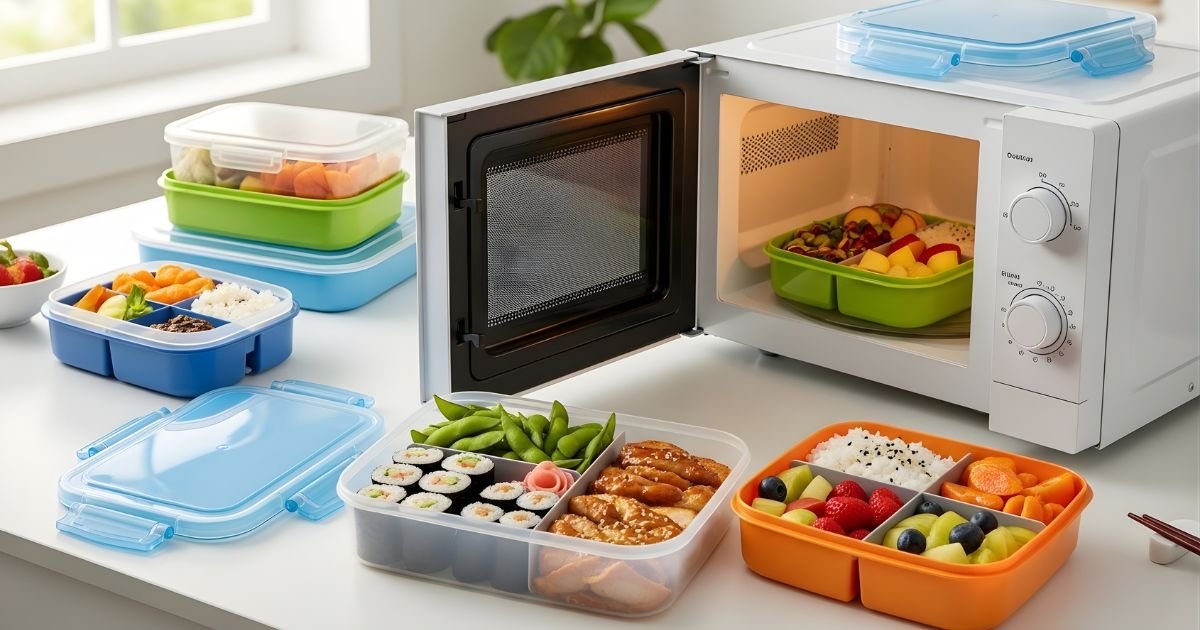
Bento boxes are popular meal containers used for office lunches, school meals, and travel-friendly food storage. But when it’s time to reheat your meal, one big question comes up- Are Bento Boxes Microwave Safe? The answer isn’t always simple.
Some bento boxes are microwave safe, but it depends on the material. Plastic (#5 polypropylene), glass, ceramic, and food-grade silicone are usually safe if labeled microwave-safe. Stainless steel, melamine, and many wooden boxes are not safe for microwaves.
Many people unknowingly microwave containers that aren’t designed for heat exposure. This can damage the box and even affect food safety.
Understanding which bento boxes can handle microwave heat helps you reheat meals safely. This guide will help you to learn which bento boxes are microwave-friendly, how to check yours, and how to heat food safely without risking damage or health concerns.
What Materials Are Bento Boxes Made Of
Bento boxes come in several materials, each with different durability and heat resistance levels. Knowing what your box is made of is the first step to understanding microwave safety.
- Polypropylene Plastic (#5): Lightweight and common in modern bento boxes. It resists heat better than many plastics and is often microwave-safe when labeled properly.
- Stainless Steel: Strong and long-lasting. Ideal for cold storage but not suitable for microwave use because metal reflects microwaves.
- Glass: Durable and non-porous. Most microwave-safe glass works well for reheating if it’s labeled accordingly.
- Ceramic: Stylish and sturdy. Microwave-safe ceramic performs well, but avoid decorative or metallic trims.
- Melamine: Hard plastic-like material. Not microwave-safe, as high heat may cause chemical breakdown.
- Wood or Bamboo: Traditional and eco-friendly. Generally not recommended for microwaves because heat can dry and crack the material.
- Silicone (Food-Grade): Flexible and heat-resistant. Many food-grade silicone containers are microwave-safe.
How to Know if Your Bento Box Is Microwave-Safe
Before reheating your lunch, check carefully. Many people ask, Are Bento Boxes Microwave Safe? The safest way to know is by checking the label and material.
Look for a microwave-safe symbol on the bottom of the bento box. This symbol usually looks like wavy lines or a small microwave icon. It indicates the container has been tested for microwave heating.
Always read the packaging or brand instructions. Some bento boxes are microwave-safe without lids, while others allow heating only for short durations. If there’s no label or guidance, it’s best to assume the bento box is not microwave-safe. Unknown plastics may melt or release chemicals when heated.
You can also check the brand’s official website or product listing for microwave safety details. Many manufacturers publish heat tolerance information. When unsure, transfer food to a glass or ceramic container before microwaving. This small step ensures safe reheating and prevents container damage.
Bento Boxes & Microwave Safety by Material
Different materials react differently to microwave heat. Understanding each one helps you decide whether your bento box can safely handle reheating.
Polypropylene Plastic (#5)
Polypropylene is one of the safest plastics for microwave use. It has a higher melting point compared to other plastics and is widely used in microwaveable food containers. However, always confirm it’s labeled microwave-safe. Avoid overheating fatty foods for long periods, as extended heat exposure may cause wear over time.
Stainless Steel
Stainless steel bento boxes are extremely durable and great for cold meals or insulated storage. They are popular for eco-conscious users. But metal reflects microwave energy and can cause sparks or damage to your microwave. Never place stainless steel containers in a microwave.
Glass
Microwave-safe glass is excellent for reheating food. It doesn’t absorb odors or stain easily and distributes heat evenly. Make sure it’s labeled microwave-safe. Avoid sudden temperature changes, such as moving from freezer to microwave immediately, to prevent cracking.
Ceramic
Ceramic containers generally perform well in microwaves if designed for it. They retain heat effectively and are non-reactive with food. Avoid ceramics with metallic decorations or unknown glazes. These can cause sparks or unsafe reactions during heating.
Melamine
Melamine bento boxes look attractive and durable. However, they are not suitable for microwave heating. High heat can cause chemical breakdown and potential contamination. Always keep melamine containers away from microwaves.
Wood or Bamboo
Wooden and bamboo bento boxes offer a traditional aesthetic. They are excellent for dry or room-temperature meals. Microwave heat can dry out wood, cause cracks, and damage protective coatings. These should not be microwaved.
Silicone
Food-grade silicone is flexible and heat-resistant. Many silicone containers are microwave-safe. Still, check manufacturer guidelines. Ensure it is labeled food-grade and free from fillers for safe heating.
Risks of Microwaving the Wrong Bento Box
Many people ask, Are Bento Boxes Microwave Safe, but few consider what can happen if the answer is “no.” Microwaving the wrong bento box can damage your container, ruin your food, and even create safety hazards in your kitchen.
Melting and Warping
Plastic that isn’t microwave-safe can soften, warp, or partially melt under high heat. This damages the container permanently and may cause it to leak. Warped lids can also lose their seal, making the box unsafe for future storage.
Chemical Leaching into Food
When low-quality or non-microwave-safe plastics are heated, chemicals may migrate into food — especially fatty or oily meals. Over time, repeated heating can increase wear and raise concerns about food contamination.
Fire and Spark Hazards
Metal containers like stainless steel reflect microwave energy instead of absorbing it. This can cause sparks, damage the microwave interior, and in rare cases, create a fire risk.
Cracking and Structural Damage
Wooden or bamboo bento boxes can dry out and crack in the microwave. Glass containers not designed for microwave use may also crack due to sudden temperature changes.
Pressure Buildup and Lid Explosions
Even if the base is microwave-safe, tightly sealed lids can trap steam. This pressure buildup may cause lids to pop off suddenly or even crack, leading to spills and burns.
Reduced Food Safety Over Time
Repeatedly microwaving unsuitable containers weakens their structure. Small cracks and scratches can trap bacteria, making the container harder to clean and less hygienic for daily use.
Tips for Storing & Reheating Food Safely in Bento Boxes
Safe reheating is just as important as safe storage. Follow these practical tips to protect both your food and container:
- Always check for a microwave-safe label.
- Remove or vent lids before heating.
- Reheat food in short intervals and stir between cycles.
- Avoid microwaving high-fat foods for extended periods in plastic.
- Replace cracked or warped containers.
- When unsure, transfer food to glass or ceramic.
- Let containers cool before washing with cold water.
Bento Box Alternatives for Microwave Heating
If your current box isn’t microwave-safe, don’t worry — better options exist. The best microwave-safe alternatives are glass containers, microwave-safe ceramic dishes, and labeled polypropylene (#5) containers.
Glass containers are one of the safest and most reliable choices. They heat evenly and don’t absorb flavors. Many come with vented lids designed for microwave use. Microwave-safe ceramic dishes are also excellent. They retain heat well and are durable. Just ensure there are no metallic decorations.
Food-grade silicone containers offer flexibility and heat resistance. They are lightweight and often foldable, making them travel-friendly. If you prefer plastic, choose clearly labeled polypropylene (#5) containers. These are commonly approved for microwave use when used properly.
Frequently Asked Questions
Are all plastic bento boxes microwave safe?
No. Only certain plastics like polypropylene (#5) are generally microwave-safe when labeled accordingly.
Can I microwave a stainless steel bento box?
No. Stainless steel reflects microwave energy and can cause sparks or damage.
Is melamine safe in the microwave?
No. Melamine should not be used in microwaves due to heat-related safety concerns.
Can I microwave a bento box lid?
Only if labeled microwave-safe. Many lids should be removed or vented.
Is silicone safer than plastic for microwaving?
Food-grade silicone is often microwave-safe and heat-resistant when approved by the manufacturer.
Final Thought
So, Are Bento Boxes Microwave Safe? The answer depends entirely on the material and labeling. Polypropylene, glass, ceramic, and silicone are usually safe when clearly marked microwave-safe.
To stay safe, always check labels, inspect your container’s condition, and avoid microwaving metal, melamine, or wood. When in doubt, transfer your food to a trusted microwave-safe dish. Making the right choice protects your health, your food, and your microwave.
